

Is China Sand Cloth resistant to alkalis?
As a supplier of China Sand Cloth, I've often been asked about the chemical resistance of our product, especially its resistance to alkalis. In this blog post, I'll delve into the topic, exploring the factors that influence the alkali resistance of China Sand Cloth and providing insights based on scientific knowledge and practical experience.
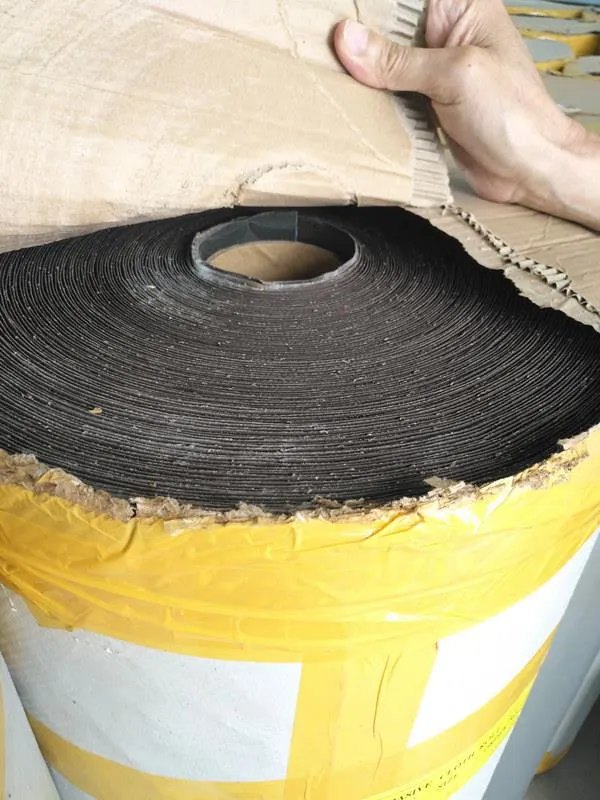
First, let's understand what China Sand Cloth is. China Sand Cloth, also known as abrasive cloth, is a type of coated abrasive material. It consists of an abrasive grit bonded to a cloth backing. The abrasive grit can be made from various materials such as aluminum oxide, silicon carbide, and emery. The cloth backing provides flexibility and durability to the sand cloth, making it suitable for a wide range of applications, including metalworking, woodworking, and automotive finishing. You can find more about different types of abrasive cloth, like the Abrasive Cloth Roll on our website.
When it comes to alkali resistance, several factors come into play. The primary factors are the type of abrasive grit and the bonding agent used in the sand cloth.
Abrasive Grit and Alkali Resistance
Different abrasive grits have different chemical properties, which affect their resistance to alkalis.
-
Aluminum Oxide: Aluminum oxide is one of the most commonly used abrasive grits in China Sand Cloth. It has relatively good chemical stability and is moderately resistant to alkalis. Aluminum oxide forms a protective oxide layer on its surface, which can slow down the reaction with alkalis. However, in strong alkaline solutions and under certain conditions such as high temperature and long - term exposure, the oxide layer can be gradually attacked, and the aluminum oxide grit may start to dissolve. The reaction of aluminum oxide with alkalis can be represented by the following chemical equation:
[Al_2O_3 + 2OH^-+ 3H_2O = 2[Al(OH)_4]^-] -
Silicon Carbide: Silicon carbide is another popular abrasive grit. It is more chemically inert compared to aluminum oxide. Silicon carbide has excellent resistance to alkalis under normal conditions. It does not react readily with alkalis at room temperature and in moderate - strength alkaline solutions. However, in extremely strong alkaline environments at high temperatures, silicon carbide may undergo some chemical reactions, although these reactions are relatively slow compared to other materials.
-
Emery: Emery is a natural abrasive that contains a mixture of minerals, mainly corundum (aluminum oxide) and magnetite. The alkali resistance of emery - based China Sand Cloth is similar to that of aluminum oxide - based sand cloth because of the significant presence of aluminum oxide. You can explore Emery Cloth for Coated & Bonded Abrasive on our website to understand its properties better.
Bonding Agent and Alkali Resistance
The bonding agent used to attach the abrasive grit to the cloth backing also plays a crucial role in the alkali resistance of China Sand Cloth.
-
Resin Bonding Agents: Resin bonding agents are widely used in sand cloth manufacturing. Different types of resins have different chemical resistances. Epoxy resins, for example, generally have good chemical resistance and can provide some protection to the abrasive grit and the cloth backing in alkaline environments. However, over time, especially in strong alkaline solutions, the resin can be gradually degraded. The degradation of the resin can lead to the detachment of the abrasive grit from the cloth backing, reducing the performance of the sand cloth.

-
Vitrified Bonding Agents: Vitrified bonding agents are made from glass - like materials. They are more chemically stable than resin bonding agents in alkaline environments. Vitrified - bonded sand cloth can maintain its integrity and the adhesion of the abrasive grit better in the presence of alkalis. However, vitrified - bonded sand cloth is more brittle compared to resin - bonded sand cloth, which may limit its application in some flexible - requirement scenarios.
Practical Applications and Alkali Exposure
In practical applications, the exposure of China Sand Cloth to alkalis may occur in various industries.
-
Metalworking: In metal - finishing processes, some metal parts may be cleaned or treated with alkaline solutions before sanding. If the sand cloth is used immediately after the metal part has been in contact with alkalis, the sand cloth may be exposed to residual alkalis. In this case, if the sand cloth has poor alkali resistance, the abrasive grit may be damaged, and the cloth backing may also be affected, reducing the sanding efficiency and the quality of the finish.
-
Automotive Industry: In automotive refinishing, some cleaning agents and degreasers may contain alkalis. If the sand cloth comes into contact with these agents during the repair and finishing process, its performance can be impacted. For example, if the bonding agent is degraded by the alkalis, the abrasive grit may fall off prematurely, resulting in uneven sanding and a poor surface finish.
Testing and Quality Assurance
As a supplier of China Sand Cloth, we conduct various tests to ensure the quality and alkali resistance of our products.
-
Chemical Immersion Tests: We immerse samples of our sand cloth in different alkaline solutions with varying concentrations and temperatures for a specific period. After the immersion, we examine the changes in the sand cloth, such as the loss of abrasive grit, the degradation of the bonding agent, and the damage to the cloth backing.
-
Performance Testing: We also perform sanding tests on materials before and after the sand cloth has been exposed to alkalis. This helps us evaluate the impact of alkali exposure on the sanding performance of the sand cloth, such as the cutting rate, the surface finish quality, and the durability of the sand cloth.
Conclusion
In conclusion, the alkali resistance of China Sand Cloth depends on the type of abrasive grit and the bonding agent used. While some China Sand Cloths have good resistance to alkalis under normal conditions, in strong alkaline environments, high temperatures, and long - term exposure, the sand cloth may be affected. As a supplier, we are committed to providing high - quality sand cloth products with reliable performance. We can offer different types of China Sand Cloth based on your specific requirements, whether you need a product with high alkali resistance or one with other properties.
If you are interested in purchasing China Sand Cloth and have specific requirements regarding alkali resistance or other aspects, please feel free to contact us for further discussion and negotiation. We look forward to serving you and meeting your abrasive needs.
References
- Smith, J. (2015). Abrasive Materials: Properties and Applications. Industrial Abrasives Journal, 22(3), 45 - 56.
- Johnson, R. (2017). Chemical Resistance of Abrasive Grits. Abrasive Technology Review, 18(2), 67 - 78.
- Brown, A. (2019). Bonding Agents in Coated Abrasives: A Review. Coated Abrasive Research, 25(1), 12 - 25.