

As a seasoned supplier of abrasive machines, I've witnessed firsthand the pivotal role that abrasive grain size plays in determining the processing effect of these machines. The abrasive grain size is not just a technical specification; it's a critical factor that can significantly impact the quality, efficiency, and cost-effectiveness of the machining process. In this blog post, I'll delve into the various aspects of how abrasive grain size influences the processing effect of an abrasive machine, drawing on my years of experience in the industry.
Understanding Abrasive Grain Size
Before we explore the impact of abrasive grain size, it's essential to understand what it means. Abrasive grain size refers to the physical dimensions of the abrasive particles used in the grinding wheel or abrasive belt. It is typically measured in terms of mesh size, which indicates the number of openings per linear inch in a sieve through which the abrasive grains pass. A higher mesh number corresponds to smaller abrasive grains, while a lower mesh number indicates larger grains.
Impact on Material Removal Rate
One of the most significant impacts of abrasive grain size is on the material removal rate (MRR). Larger abrasive grains have a more aggressive cutting action, which allows them to remove material at a faster rate. This is because larger grains have a greater cutting edge and can penetrate deeper into the workpiece. As a result, they are ideal for rough grinding operations where a large amount of material needs to be removed quickly.
For example, in the initial stages of grinding a large metal workpiece, a coarse-grained grinding wheel can efficiently remove the bulk of the material, reducing the overall machining time. However, it's important to note that while larger grains offer a higher MRR, they also tend to produce a rougher surface finish.
On the other hand, smaller abrasive grains have a lower MRR but are better suited for finishing operations. They can remove material more precisely and produce a smoother surface finish. Smaller grains are less likely to cause surface damage or leave behind deep scratches, making them ideal for applications where a high-quality surface finish is required, such as in the aerospace or automotive industries.
Impact on Surface Finish
The surface finish of a machined workpiece is another crucial factor that is influenced by abrasive grain size. As mentioned earlier, larger grains tend to produce a rougher surface finish due to their aggressive cutting action. The larger cutting edges of the grains leave behind deeper grooves and scratches on the workpiece surface, resulting in a lower surface quality.
In contrast, smaller abrasive grains can produce a much smoother surface finish. They have a finer cutting action and can remove material in smaller increments, resulting in a more uniform surface texture. This is particularly important in applications where the surface finish directly affects the performance or aesthetics of the final product.
For instance, in the production of precision components, such as engine parts or medical devices, a smooth surface finish is essential to ensure proper functionality and to meet strict quality standards. Using a fine-grained abrasive wheel or belt can help achieve the desired surface finish, reducing the need for additional finishing operations.
Impact on Grinding Forces and Power Consumption
Abrasive grain size also has a significant impact on the grinding forces and power consumption during the machining process. Larger grains require more force to cut through the material, which results in higher grinding forces. These higher forces can put additional stress on the workpiece, the grinding wheel, and the machine itself, potentially leading to increased wear and tear and reduced tool life.
Moreover, the higher grinding forces associated with larger grains also require more power to drive the abrasive machine. This can result in increased energy consumption and higher operating costs. In contrast, smaller abrasive grains require less force to cut through the material, resulting in lower grinding forces and reduced power consumption.
By using a finer-grained abrasive wheel or belt, manufacturers can not only reduce the energy consumption of their abrasive machines but also extend the tool life and improve the overall efficiency of the machining process. This can lead to significant cost savings in the long run.
Impact on Wheel Wear and Dressing Frequency
The wear rate of the grinding wheel is another important consideration when it comes to abrasive grain size. Larger grains tend to wear out more quickly than smaller grains due to their aggressive cutting action. The larger cutting edges of the grains are more prone to chipping and breaking, which can lead to a rapid decrease in the wheel's cutting performance.
As a result, wheels with larger abrasive grains often require more frequent dressing to maintain their cutting efficiency. Dressing is the process of removing the dull or worn-out abrasive grains from the wheel surface and exposing new, sharp grains. Frequent dressing can increase the downtime of the abrasive machine and add to the overall operating costs.

On the other hand, smaller abrasive grains have a slower wear rate and require less frequent dressing. They are more resistant to chipping and breaking, which allows them to maintain their cutting performance for a longer period. This can reduce the downtime of the machine and improve the productivity of the machining process.
Choosing the Right Abrasive Grain Size
Selecting the appropriate abrasive grain size is crucial to achieving the desired processing effect and optimizing the performance of the abrasive machine. The choice of grain size depends on several factors, including the type of material being processed, the required surface finish, the material removal rate, and the specific application.
For rough grinding operations where a large amount of material needs to be removed quickly, a coarse-grained abrasive wheel or belt is typically recommended. Coarse grains, such as those with a mesh size of 24 to 60, can provide a high material removal rate and are suitable for applications such as stock removal, deburring, and pre-grinding.
For finishing operations where a smooth surface finish is required, a fine-grained abrasive wheel or belt is the better choice. Fine grains, such as those with a mesh size of 100 to 600, can produce a high-quality surface finish and are ideal for applications such as precision grinding, surface finishing, and polishing.
In some cases, a combination of different grain sizes may be used to achieve the best results. For example, a coarse-grained wheel can be used for the initial rough grinding operation to remove the bulk of the material, followed by a fine-grained wheel for the final finishing operation to achieve the desired surface finish.
Our Abrasive Machines and the Role of Grain Size
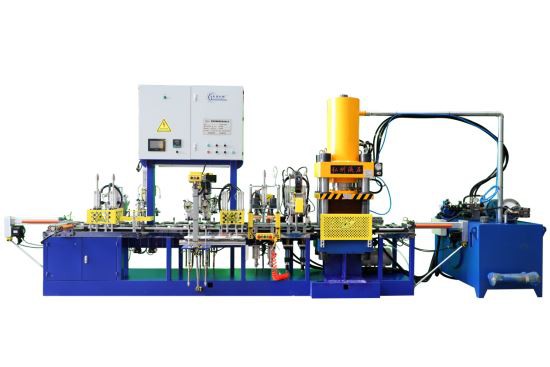
At our company, we offer a wide range of Abrasive Cutting And Grinding Wheel Forming Machine designed to meet the diverse needs of our customers. Our machines are equipped with high-quality abrasive wheels and belts that are available in a variety of grain sizes to ensure optimal performance and processing results.
Whether you need to remove a large amount of material quickly or achieve a smooth surface finish, our abrasive machines can be customized to suit your specific requirements. We also offer Fully Automatic Punching Machine for VELCRO DISCS and Abrasive Cutting And Grinding Wheel Forming Machine Four Head Automatic Propulsion Machine that are designed to provide high precision and efficiency in the production of abrasive products.
Conclusion
In conclusion, abrasive grain size plays a crucial role in determining the processing effect of an abrasive machine. It affects the material removal rate, surface finish, grinding forces, power consumption, wheel wear, and dressing frequency. By understanding the impact of abrasive grain size and choosing the appropriate grain size for the specific application, manufacturers can optimize the performance of their abrasive machines, improve the quality of their products, and reduce the overall operating costs.
If you're looking for high-quality abrasive machines that can help you achieve the best processing results, we invite you to contact us for a consultation. Our team of experts can provide you with personalized advice and solutions based on your specific needs and requirements. Let's work together to take your machining operations to the next level.
References
- Boothroyd, G., & Knight, W. A. (2006). Fundamentals of machining and machine tools. CRC Press.
- Trent, E. M., & Wright, P. K. (2000). Metal cutting. Butterworth-Heinemann.
- Stephenson, D. A., & Agapiou, J. S. (2006). Metal machining: theory and applications. CRC Press.