

Hey there! As a supplier of Flap Disc Ovens, I'm super stoked to share with you the ins and outs of how these nifty machines work. So, let's dive right in and explore the operating principle of a Flap Disc Oven.
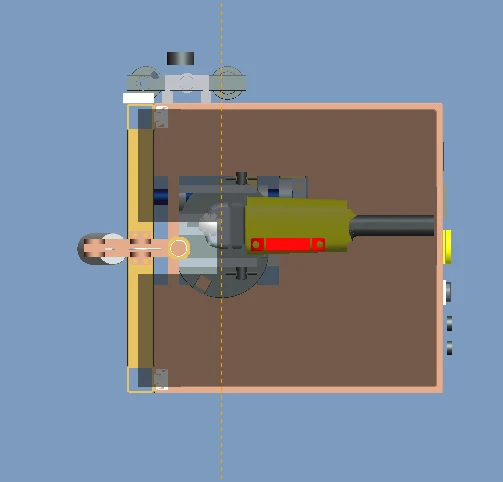

First off, what's a flap disc? Well, it's an abrasive tool that's widely used in metalworking, woodworking, and other industries for grinding, finishing, and polishing. It consists of multiple overlapping abrasive flaps that are attached to a backing plate. These flaps are usually made of abrasive materials like aluminum oxide or silicon carbide, which give the flap disc its cutting power.
Now, let's talk about the oven. A Flap Disc Oven is a specialized piece of equipment designed to cure the adhesive that holds the abrasive flaps to the backing plate. This curing process is crucial because it ensures that the flaps stay firmly attached during use, which in turn improves the performance and durability of the flap disc.
The basic operating principle of a Flap Disc Oven involves three main stages: preheating, curing, and cooling. Let's take a closer look at each of these stages.
Preheating
The preheating stage is the first step in the curing process. During this stage, the oven is heated to a specific temperature, usually between 100°C and 200°C (212°F and 392°F), depending on the type of adhesive being used. This preheating step is important because it helps to activate the adhesive and prepare it for the curing process.
To start the preheating process, the operator loads the flap discs into the oven. The oven is then sealed, and the heating elements are turned on. The temperature inside the oven is monitored using a thermostat, which ensures that the temperature remains within the specified range.
As the oven heats up, the adhesive on the flap discs begins to soften and become more pliable. This allows the adhesive to flow and bond more effectively with the backing plate and the abrasive flaps. The preheating stage typically takes anywhere from 10 to 30 minutes, depending on the size and type of the oven, as well as the number of flap discs being cured.
Curing
Once the oven has reached the desired preheating temperature, the curing stage begins. During this stage, the oven maintains a constant temperature for a specific period of time, usually between 30 minutes and 2 hours, depending on the type of adhesive and the thickness of the flap discs.
The curing process is essentially a chemical reaction that occurs between the adhesive and the oxygen in the air. As the adhesive is heated, it undergoes a cross-linking reaction, which causes it to harden and form a strong bond between the backing plate and the abrasive flaps. This cross-linking reaction is what gives the flap disc its strength and durability.
To ensure that the curing process is uniform and consistent, the oven is equipped with a fan or a circulation system. This system helps to distribute the heat evenly throughout the oven, which ensures that all of the flap discs are cured at the same rate.
During the curing stage, it's important to monitor the temperature and the time carefully. If the temperature is too high or the curing time is too long, the adhesive may overcure, which can cause the flap discs to become brittle and prone to cracking. On the other hand, if the temperature is too low or the curing time is too short, the adhesive may not cure properly, which can result in the flaps coming loose during use.
Cooling
After the curing stage is complete, the final stage of the process is cooling. During this stage, the oven is turned off, and the flap discs are allowed to cool down gradually to room temperature. This cooling process is important because it helps to prevent the flap discs from warping or cracking due to rapid temperature changes.
To start the cooling process, the operator opens the oven door slightly to allow the hot air to escape. The flap discs are then left in the oven for a period of time, usually between 30 minutes and 1 hour, depending on the size and type of the oven.
As the flap discs cool down, the adhesive continues to harden and strengthen. Once the flap discs have reached room temperature, they are removed from the oven and are ready to be used or packaged for sale.
Additional Features and Considerations
In addition to the basic operating principle, there are several other features and considerations that are important when it comes to Flap Disc Ovens. Here are a few of them:
- Temperature Control: As mentioned earlier, temperature control is crucial during the curing process. Most Flap Disc Ovens are equipped with a thermostat or a temperature controller that allows the operator to set and maintain the desired temperature. Some ovens also have a programmable controller that allows the operator to set different temperature profiles for different types of adhesive or flap discs.
- Air Circulation: Proper air circulation is essential for ensuring that the heat is distributed evenly throughout the oven. Most Flap Disc Ovens are equipped with a fan or a circulation system that helps to move the hot air around the oven. This helps to prevent hot spots and ensures that all of the flap discs are cured at the same rate.
- Safety Features: Flap Disc Ovens are typically equipped with several safety features to prevent accidents and ensure the safety of the operator. These features may include over-temperature protection, door interlocks, and emergency stop buttons.
- Capacity: The capacity of a Flap Disc Oven refers to the number of flap discs that it can hold at one time. The capacity of an oven can vary depending on its size and design. When choosing an oven, it's important to consider the production volume and the size of the flap discs that you need to cure.
Related Equipment
If you're in the business of manufacturing flap discs, there are several other pieces of equipment that you may find useful. Here are a few examples:
- The Flap Disc Grinding Test Machine: This machine is used to test the grinding performance of flap discs. It allows you to simulate real-world grinding conditions and evaluate the cutting efficiency, durability, and surface finish of the flap discs.
- Non-woven Cloth Slitting Machine For Flap Disc And Flap Wheel: This machine is used to slit non-woven cloth into strips that can be used to make flap discs and flap wheels. It allows you to cut the cloth to the desired width and length with high precision.
- Flap Disc Speed Test Machine: This machine is used to test the rotational speed of flap discs. It allows you to measure the speed of the flap disc under different operating conditions and ensure that it meets the required safety standards.
Conclusion
Well, there you have it! That's the operating principle of a Flap Disc Oven in a nutshell. As you can see, these machines play a crucial role in the manufacturing process of flap discs. By ensuring that the adhesive is cured properly, they help to improve the performance and durability of the flap discs, which in turn benefits both the manufacturers and the end-users.
If you're in the market for a Flap Disc Oven or any of the related equipment mentioned above, I'd love to hear from you. Whether you're a small-scale manufacturer or a large industrial company, we have the expertise and the products to meet your needs. So, don't hesitate to reach out and start a conversation. Let's work together to take your flap disc production to the next level!
References
- "Abrasive Technology Handbook" by Gary S. Fischman
- "Industrial Ovens: Design, Operation, and Maintenance" by John C. Crankshaw