
As a seasoned supplier of China Abrasive Machines, I'm excited to delve into the programming methods that power these remarkable pieces of equipment. In the world of manufacturing, abrasive machines play a pivotal role in shaping, finishing, and refining a wide range of materials. From metalworking to woodworking, these machines are essential for achieving precision and quality in production processes.
Understanding the Basics of Abrasive Machine Programming
Before we dive into the specific programming methods, it's important to understand the fundamental concepts behind abrasive machine operation. Abrasive machines typically use grinding wheels, belts, or other abrasive tools to remove material from a workpiece. The programming of these machines involves controlling various parameters such as speed, feed rate, depth of cut, and tool path to achieve the desired results.
One of the key aspects of abrasive machine programming is the use of numerical control (NC) or computer numerical control (CNC) systems. These systems allow for precise control of the machine's movements and operations, enabling complex machining tasks to be performed with high accuracy and repeatability. In a CNC abrasive machine, the programming is done using a specialized software that generates a set of instructions, known as a G-code program, which is then executed by the machine's control unit.
Programming Methods for Abrasive Machines
Manual Programming
Manual programming is the most basic form of programming for abrasive machines. It involves manually entering the G-code instructions into the machine's control unit. This method is suitable for simple machining tasks with straightforward geometries and limited complexity. Manual programming requires a good understanding of G-code commands and the machine's capabilities.
For example, to program a simple grinding operation on a manual abrasive machine, the operator would need to specify the starting position, the feed rate, the depth of cut, and the number of passes. The G-code commands for a basic grinding operation might look something like this:
N10 G21 ; Set units to millimeters
N20 G90 ; Set absolute positioning mode
N30 S1000 M03 ; Set spindle speed to 1000 RPM and start spindle in clockwise direction
N40 G00 X10 Y20 ; Rapid move to starting position
N50 G01 Z-5 F50 ; Feed down to a depth of 5 mm at a feed rate of 50 mm/min
N60 G01 X50 Y30 F100 ; Feed along the specified path at a feed rate of 100 mm/min
N70 G00 Z10 ; Rapid move up to clear the workpiece
N80 M05 ; Stop the spindle
N90 M30 ; End the program
While manual programming is relatively simple and cost-effective, it can be time-consuming and error-prone, especially for complex machining tasks.
Computer-Aided Manufacturing (CAM) Programming
Computer-Aided Manufacturing (CAM) programming is a more advanced and efficient method for programming abrasive machines. CAM software allows users to create 3D models of the workpiece and the machining operations using a graphical interface. The software then automatically generates the G-code program based on the user's input.
CAM programming offers several advantages over manual programming. It reduces the programming time significantly, especially for complex geometries. It also allows for better visualization of the machining process, which helps in identifying potential errors or collisions before the actual machining takes place. Additionally, CAM software can optimize the tool path to minimize machining time and improve the quality of the finished product.
To use CAM programming for an abrasive machine, the user first needs to import the 3D model of the workpiece into the CAM software. Then, the user defines the machining operations, such as grinding, cutting, or polishing, and specifies the tool parameters, such as the type of abrasive tool, the diameter, and the cutting speed. The CAM software then generates the G-code program, which can be transferred to the machine's control unit for execution.
Advanced Programming Techniques
Adaptive Control Programming
Adaptive control programming is a sophisticated technique that allows the abrasive machine to adjust its machining parameters in real-time based on the feedback from sensors. This technique is particularly useful for applications where the material properties or the machining conditions vary during the machining process.
For example, in grinding operations, the hardness of the workpiece material can vary from one part to another, which can affect the grinding force and the surface finish. With adaptive control programming, the machine can monitor the grinding force using a force sensor and adjust the feed rate or the spindle speed accordingly to maintain a consistent grinding performance.

Robotic Programming
In recent years, the use of robots in abrasive machining has become increasingly popular. Robotic programming involves teaching the robot to perform the machining operations using a combination of manual guidance and offline programming.
Offline programming allows the user to create the robot program using a computer simulation software without the need to physically interact with the robot. This method is more efficient and safer than manual programming, as it reduces the risk of collisions and allows for better optimization of the robot's movements.
Our Product Range and Programming Capabilities
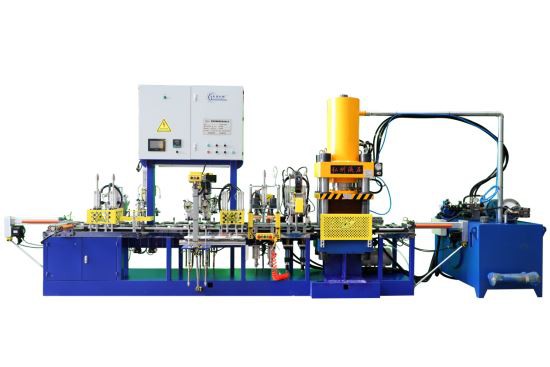
As a leading supplier of China Abrasive Machines, we offer a wide range of high-quality machines with advanced programming capabilities. Our product portfolio includes Automatic Flap Wheel Cutting Machine, Crawler Type Belt Joint Grinding And Gluing Integrated Machine, and Abrasive Cutting And Grinding Wheel Forming Machine.
Our machines are equipped with state-of-the-art CNC systems and can be programmed using both manual and CAM programming methods. We also offer training and support services to help our customers get the most out of their machines. Whether you are a small workshop or a large manufacturing plant, we have the right abrasive machine and programming solution for your needs.
Contact Us for Procurement and Consultation
If you are interested in learning more about our China Abrasive Machines or would like to discuss your specific requirements, please feel free to contact us. Our team of experts is ready to assist you in selecting the right machine and programming method for your application. We look forward to partnering with you to achieve your manufacturing goals.
References
- "Numerical Control Programming Handbook" by John A. Reha
- "Computer-Aided Manufacturing: A Practical Guide" by David A. Dornfeld
- "Robotics and Automation in Manufacturing" by Thomas R. Kurfess