

Glue for Flap Disc
Glue is to determine the firmness of the flap disc, determines the speed of the flap disc.sc.
An epoxy is a glue for flap disc that forms when you mix epoxy resin and hardener. The two substances are stored in different containers and are only mixed together when you’re ready for gluing – Which you can do using a double syringe, for example. You should keep the mixing ratio 1:1, otherwise the resin will not cross link.
Benefits of Glue for Flap Disc
Great flexural strength
Glue for flap disc has an enviable flexural strength, and this makes it suitable for applications such as casting or laminating load-bearing forms or forms that will be subjected to lots of stress. It is also worth noting that most glue for flap disc also come with enhanced resistance to both moisture and chemicals and this is why they are preferred for use in outdoor sculptures.
Have good “wetting” properties
Glue for flap disc are known to have very good wetting properties owing to their high quality adhesive nature. As such, they enjoy a long pot-life before they start losing their toughness. It is for this reason that glue for flap disc is seen as a good option for lamination, and it is always a common constituent in most of the special paint finishes.
Do not attack polystyrene
Another admirable feature of glue for flap disc is that they do not attack polystyrene as is always the case with other glue types. As such, it is one of the most popular options for coating Styrofoam or polystyrene forms.
No special pre-warming necessary
Just like polyurethane resin and polyester, glue for flap disc and resins will not need any kind of special pre-warming for them to cure and mix well when you want to use them. You can easily use the glue under normal room temperatures, but you can always use moderate heat if you want to accelerate the curing process.
Can be used with a variety of fillers
As far as filling goes, epoxy-based glues can work well with a variety of fillers, without ever worrying about the risk of moisture. This gives a lot of flexibility on the type and nature of fillers you would like to use. Whether you are interested in using fillers such as marble dust, filite, metal powders, or dried ball clay, you can easily use them with glue for flap disc to create high-quality clay-like putty that you can use for all your filling needs.
The resin lasts much longer
Another feature you will find admirable about glue for flap disc is that its resin component has a longer shelf-life compared to other types of resins. It can last for up to three years, though most manufacturers will state that it can last up to only one year on the shelves. Perhaps this is so owing to the fact that the hardener part is more active and comes with a shorter lifespan.


Experience and expertise
No matter what kind of flap disc/ wheel forming, cutting and grinding wheel & packaging machinery, based on our extensive experience, we can manufacture it. In particular, we could provide control system for the whole production line, which makes the final selection abrasive machine can be distinguished from the vast majority of machine on the market.
Cutting-edge technology
HG Abrasive attaches great importance to product technology research and development for the beginning. It has successfully developed seven series of abrasive flap disc machines .Our production equipment is advanced and management is customized.
Customer-focused
Good products must have good services. HG Abrasive has a complete marketing service network, with nearly 100 existing marketing and service personnel, which can meet customer needs in the first time.
Applications Of Glue For Flap Disc
Fiberglass is a widely used material in passenger cars, boat hulls, and livestock trailers. Such surfaces are prone to cracks and dents that if not treated in time, they May expand and lead to very costly repairs. Glue for flap disc, can, however, be used to restore such surfaces in case of minor damage or dents.
A small portion of glue for flap disc is sufficient to replace wood glue when you are working on cabinets and furniture. One huge advantage it has over wood glue is that it sets faster, and as such, it is ideal in urgent situations where faster setting is required. It can also make a reliable secondary glue to reinforce wood glue. In most instances, they have been used to laminate plywood using fiberglass. When used in this manner, the strength and durability of the construction are greatly enhanced. It is also a common choice for coating bar tops.
Glue for flap disc and epoxy adhesives are very effective when used to repair rust in metal or rot in wood. They can be used as fillers to restore metal or wooden beams. The only thing you should watch out for when using glue for flap disc and resins as fillers is that for the sake of metals, be sure to choose one that doesn’t have chemical additives that May end up causing unwanted reactions.
Glue for flap disc and resins can also be used to reinforce fasteners such as bolts. For example, during the bolting process of a heavy vibrating machine to concrete floors, it is normal to find epoxy resins being used as reinforcement. They are used to protect such bolts from getting corroded, to strengthen the joints, and to delay any cracking that May be a result of stress.
It will surprise you to learn that glue for flap disc can be used to make custom jewelry. This May not be a common application, but for layered metal jewelry, glue for flap disc and resin are known to provide a very good experience in binding the layers together.
Adhesion: The core quality of glue for flap disc is its exceptional strength and adhesive properties, with its ability to form bonds of great strength and durability. It's crucial, however, to consider the surface (substrate) to which the glue for flap disc will be applied to ensure good adhesion. Glue for flap disc is compatible with various materials, including metal, wood, concrete, and many plastics. Some items are unsuitable for bonding with glue for flap disc resin.
Tensile Strength: Tensile strength measures the maximum tension a material can withstand before breaking and failing. Glue for flap disc with high tensile strength are suitable for applications where the material will be subject to pressure or pulling forces. Higher tensile strength is important for applications subject to great stresses and strains and where structural integrity is critical.
Electrical Properties: In addition to the other physical properties of glue for flap disc, glue for flap disc is widely used in the electronics industry for its excellent electrical properties. Glue for flap disc has high dielectric strength, making it ideal for insulating electrical components. It has a low dielectric constant, a factor in determining the capacitance of electrical parts, a low dissipation factor, high volume resistivity, and high surface resistivity, which are important measures for effective electrical insulation.
Aesthetics: Glue for flap disc can benefit a project by improving its aesthetics. If important to the project, an glue for flap disc that meets your needs for both finish and color (even clarity) should be considered. Glue for flap disc also can improve application aesthetics by eliminating the need for metal fasteners in some bonding applications.


Mixing Ratio and Curing Time: It is imperative to accurately measure and completely mix the resin and hardener in the prescribed ratio to achieve the desired performance characteristics. Proper curing is essential for achieving optimal properties and longevity of the cured material. Following the manufacturer's recommendations on curing time and environmental conditions is crucial to ensure the best results. The curing time will impact the production time of the application. An epoxy system may have a long or very short curing time, and a system may be formulated to fine-tune the desired working time. The curing time determines the length of time to work with the material before it starts to harden.
Application Method: The method of application may be selected to best suit your needs and can also affect the performance of the epoxy. Application methods can be semi-automated or manual. Some methods are more suitable for certain applications than others and the selection of the appropriate method depends on the requirements of the project, its size and scope, and the desired outcome.
Precautions: It is important to follow all manufacturer's instructions for use and precautions. Reviewing the safety data sheet (SDS) and taking the necessary precautions — Such as wearing appropriate protective equipment and working in a well-ventilated area are important.
Cost: The cost of glue for flap disc can vary widely depending on factors such as quality, quantity, and application method. Because epoxy offers durability, reliability, low maintenance, versatility and reduced waste, among other factors, it can be the most effective cost solution to your application needs. The price must be evaluated in the context of these factors, as well as the performance requirements of the project.
Types of Glue for Flap Disc
DGEBA Epoxy Resin
DGEBA epoxy, or diglycidyl ether of bisphenol A (BPA), is the earliest epoxy resin and by far the most important in epoxy adhesive formulations, not least because of its low raw material cost. Furthermore, this resin is compatible with a wide range of catalysts, allowing for the creation of a diverse spectrum of properties.
DGEBA epoxy-based industrial epoxy adhesive solutions cure at ambient temperature or with the addition of heat. DGEBA epoxy resin is available in a variety of forms, including low molecular weight liquids, high molecular weight semi-solids and solids, and brominated resins. The latter are generally employed in applications that necessitate ignition resistance. As a result, brominated resins are commonly used in circuit boards and other applications that require flame retardance.
Waterborne Epoxy Adhesives
Epoxies are hydrophobic by nature and hence cannot dissolve in water. Regardless, water dispersibility can be imparted to epoxies via chemical modification or emulsification. The latter is generally employed for resins in aqueous epoxy adhesives, and it is accomplished by using a surfactant to separate the water from the resin. The mechanical and chemical stability of the adhesive is determined by the surfactant used and the manufacturing parameters used.
Epoxy Acrylate Resins
Two types of epoxy acrylate resins are utilized to make adhesives: vinyl ester and a specific resin for radiation curing. Despite being epoxies, these resins behave more like polyester resins. They're simple to make, cure quickly at room temperature, and can be cured with peroxides.
These epoxy resins have a lower viscosity, more flexibility, and better wetting properties in adhesives than traditional DEGBA epoxies. They do shrink more than any other epoxy adhesive when they cure.
Flexible Epoxy Resin Glues
Epoxy glues and adhesives aren't recognized for being particularly flexible. Long-chain aliphatic epoxy resins, on the other hand, allow epoxy adhesives to be made more flexible. Nonetheless, the use of this flexible epoxy resin reduces the glue's hardness. As a result, flexible epoxy resins are typically blended as modifiers with other epoxies to create a tougher, stronger, but still flexible solution. When 10-30% of the resin is aliphatic epoxy, the requisite level of flexibility can be attained without significantly affecting other qualities. These are the most effective flexible epoxy adhesive methods available. Flexible epoxy resin adhesives are used for laminating safety glass, absorbing vibration and sound, and encapsulating electrical components and other delicate components that require temperature cycling, among other applications.
Epoxy Novolac Adhesives
Epoxy novolac adhesives are well-known for being the most chemically and thermally resistant epoxies. They also adhere to surfaces better than BPA epoxies. The epoxy novolac must be cured at a high temperature in order to fully acquire these qualities. The qualities that can be reached when cured at room temperature are similar to those of DGEBA epoxy adhesives. The length of the curing cycle influences the thermal stability of the cured bond.
Due to their high viscosity, epoxy novolac resins are generally difficult to manufacture. To make processing easier, low viscosity alternatives have lately been created. These products, on the other hand, have a lower epoxy resin content. In any event, epoxy novolac is virtually entirely made up of 2K epoxy glue.
Epoxy Adhesives That Cure at Room Temperature
Epoxy adhesives for room temperature cure are typically manufactured and supplied in a two-component package, with the epoxy resin component parked in one resin part and the curing agent parked in the other hardener part. When these two elements are mixed together, epoxy resin reacts fast with the curing agent at room temperature to form a cross-linked strong thermoset structure that can tightly attach adhesion substrates. Pot life and cure time can be customized by using several types of curing chemicals.
Epoxy Adhesives That Dry at Ambient Temperature
Because its reaction with epoxy resin is very fast in the presence of modest amounts of basic chemicals such as tertiary amine or imidazole as an accelerator, mercaptan compounds are commonly used as curing agents for fast room temperature curable epoxy adhesives. Through a poly-addition reaction mechanism, epoxy resin reacts equivalently with the mercaptan group. At room temperature, the fixture time can be as short as 30 minutes or as long as 15 minutes. It will take 24 hours for the remedy to complete. Precautions must be taken due to its limited working life of 10 or perhaps 5 minutes.
Company Introduction
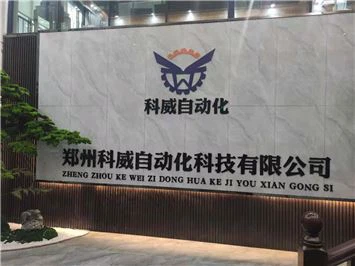
Zhengzhou HG Abrasive Tech.Co.,Ltd. is a high-tech enterprise that independently designs,develops,produces and sell the automation abrasive flap disc production line.
It was established in 2015 and its wholly owned subsidiary is Zhengzhou Kaway Automation Tech.Co.,Ltd.. With total assents of 80 million yuan and more than 150 employees, the company Chinese market ranks the second .
HG Abrasive attaches great importance to product technology research and development for the beginning. It has successfully developed seven series of abrasive flap disc machines .Our production equipment is advanced and management is customized.
Good products must have good services. HG Abrasive has a complete marketing service network, with nearly 100 existing marketing and service personnel, which can meet customer needs in the first time.
After many years development, our productions have spread all over the country. And are exported to Mexico ,South Korea, Japan, Russia, Thailand, Vietnam, Ukraine and some other countries.
If you are looking for any related products and machines ,or want to become the sole agent in your country ,please contact us at ZHENGZHOU HG ABRASIVE TECH.CO.LTD.. We warmly welcome new and old customers to visit our company . We look forward to working with you.


Asked Questions
We're one of the most professional glue for flap disc manufacturers and suppliers in China. Feel free to buy the best quality glue for flap disc at competitive price here. For more info about various equipments, welcome to contact our factory.
Professional Flap Disc Glue